
The Acropolis of Volterra: Studies and Excavations
Archaeological investigations of the sanctuary on the Acropolis of Volterra have made it possible to reconstruct an almost uninterrupted historical and monumental sequence extending over more than four millennia, from the Copper Age to the Late Medieval period.
The scientific rediscovery of the site followed a path marked by three key phases:
Doro Levi (1926): He initiated the first systematic explorations on the Piano di Castello, bringing to light the eastern side of Temple B, but the excavations were soon interrupted.
Mauro Cristofani (1967–1972): On behalf of the Superintendency, he identified the remains of the two major Hellenistic temples (A and B), laying the foundations for the chronology of Volterra’s urban development (poleogenesis).
Marisa Bonamici (since 1987): She directed systematic annual excavation campaigns that revolutionized the understanding of the site, exploring the western sector and revealing the Archaic phases and details concerning the cult practices, also thanks to a multidisciplinary approach based on stratigraphic excavation (archaeology, architecture, and geology).
Stratigraphic excavations have established that the sanctuary was founded in an area that had already been occupied during earlier periods:
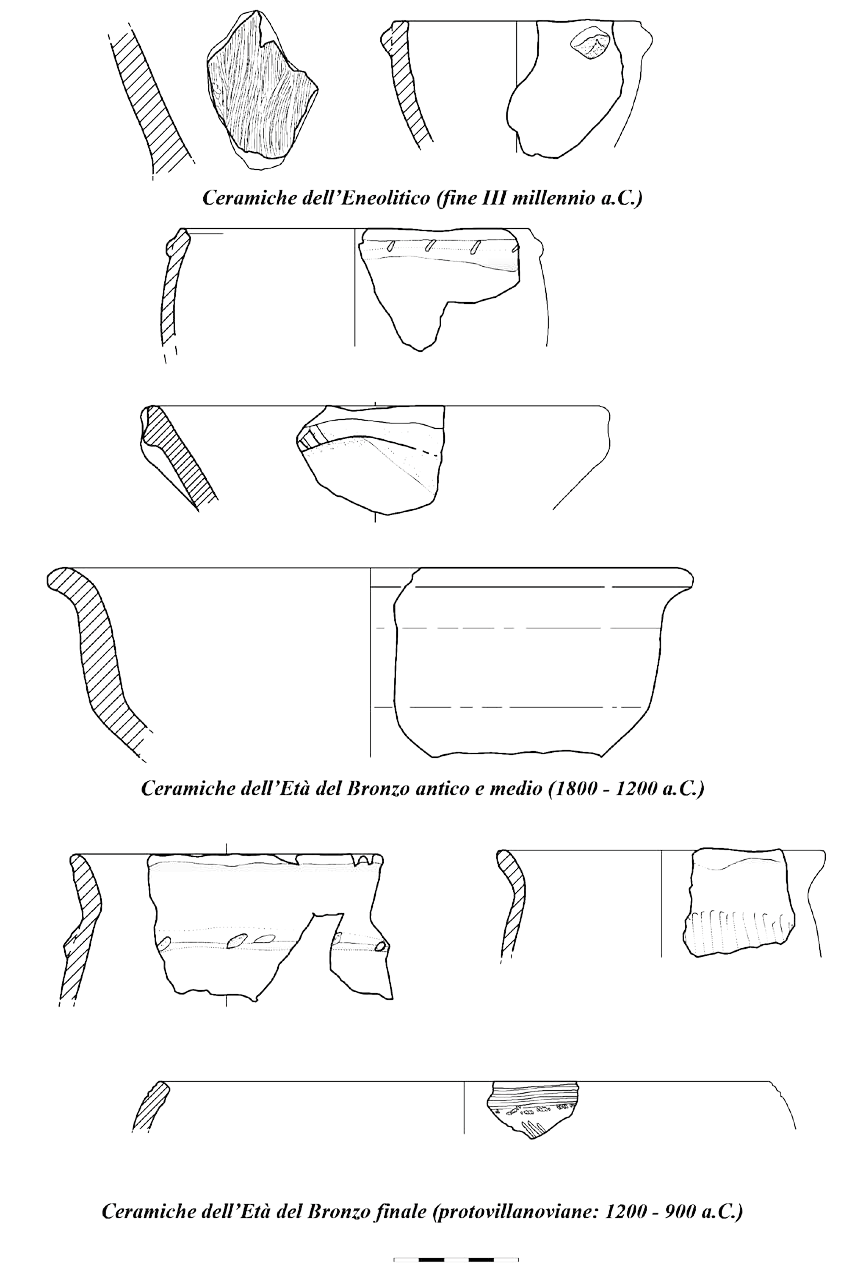
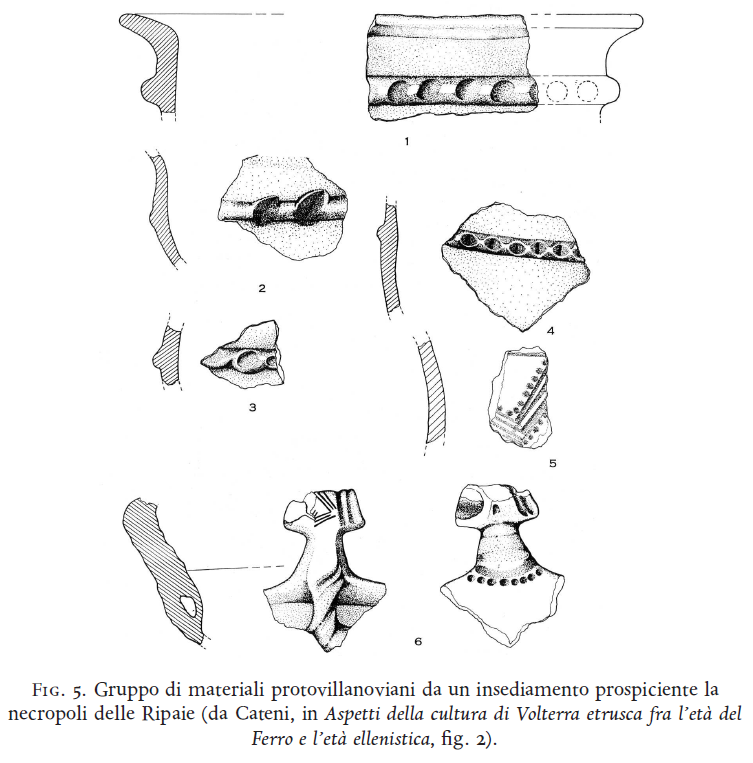
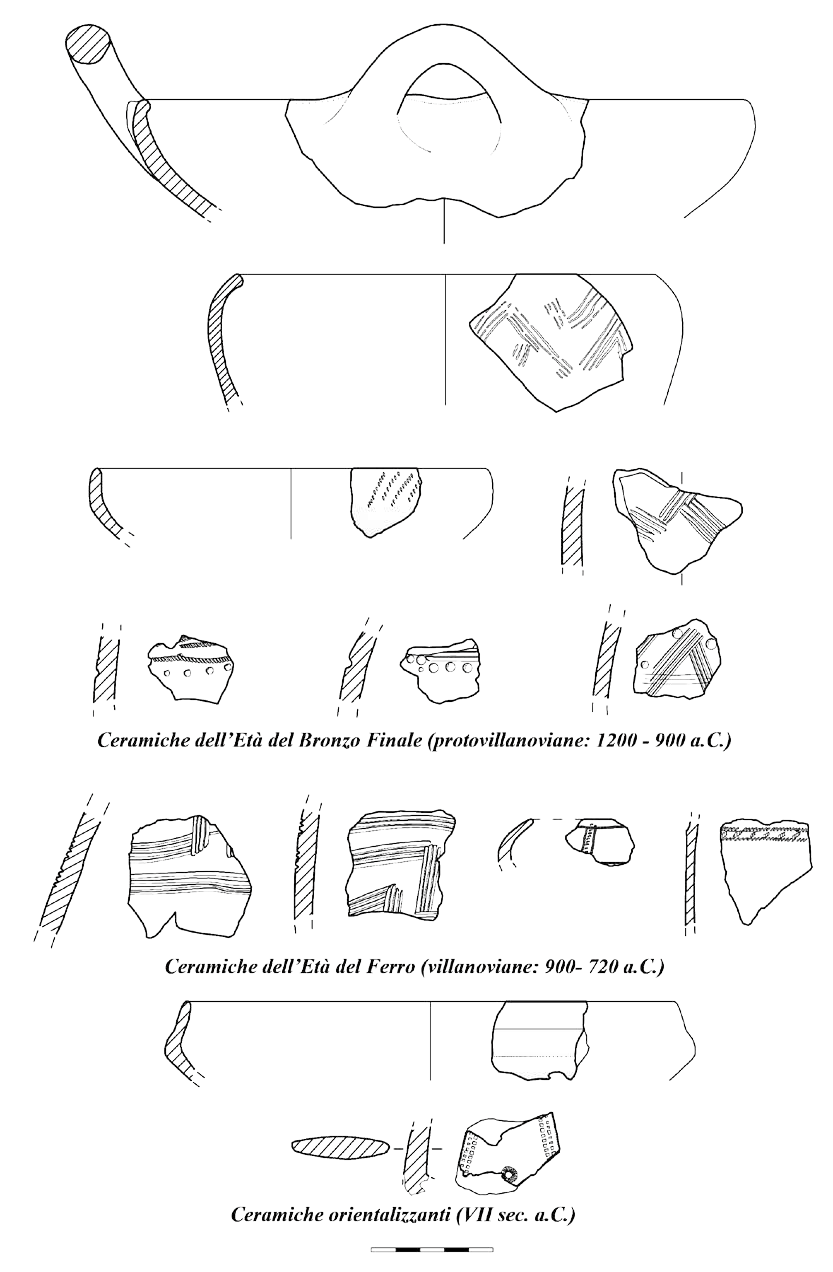
1. Pre-sanctuary Phase (2300 BC–8th century BC): Archaeological investigations have uncovered around one thousand ceramic fragments dating from the Bronze and Iron Ages (FIG. 2, 3, 4). These materials were found in secondary deposition, meaning they were recovered from layers used to fill and level natural rock fractures or as construction fills within the podiums of the Hellenistic temples. This evidence indicates that the Acropolis was already permanently inhabited and was therefore likely the “driving centre” of the proto-urban settlement.
-

- Fig. 2 – Ceramiche dell’età del bronzo
-
- Fig. 3 – Gruppo di materiali protovillanoviani da un insediamento prospiciente la necropoli delle Ripaie
-
- Fig. 4 – Ceramiche orientalizzanti
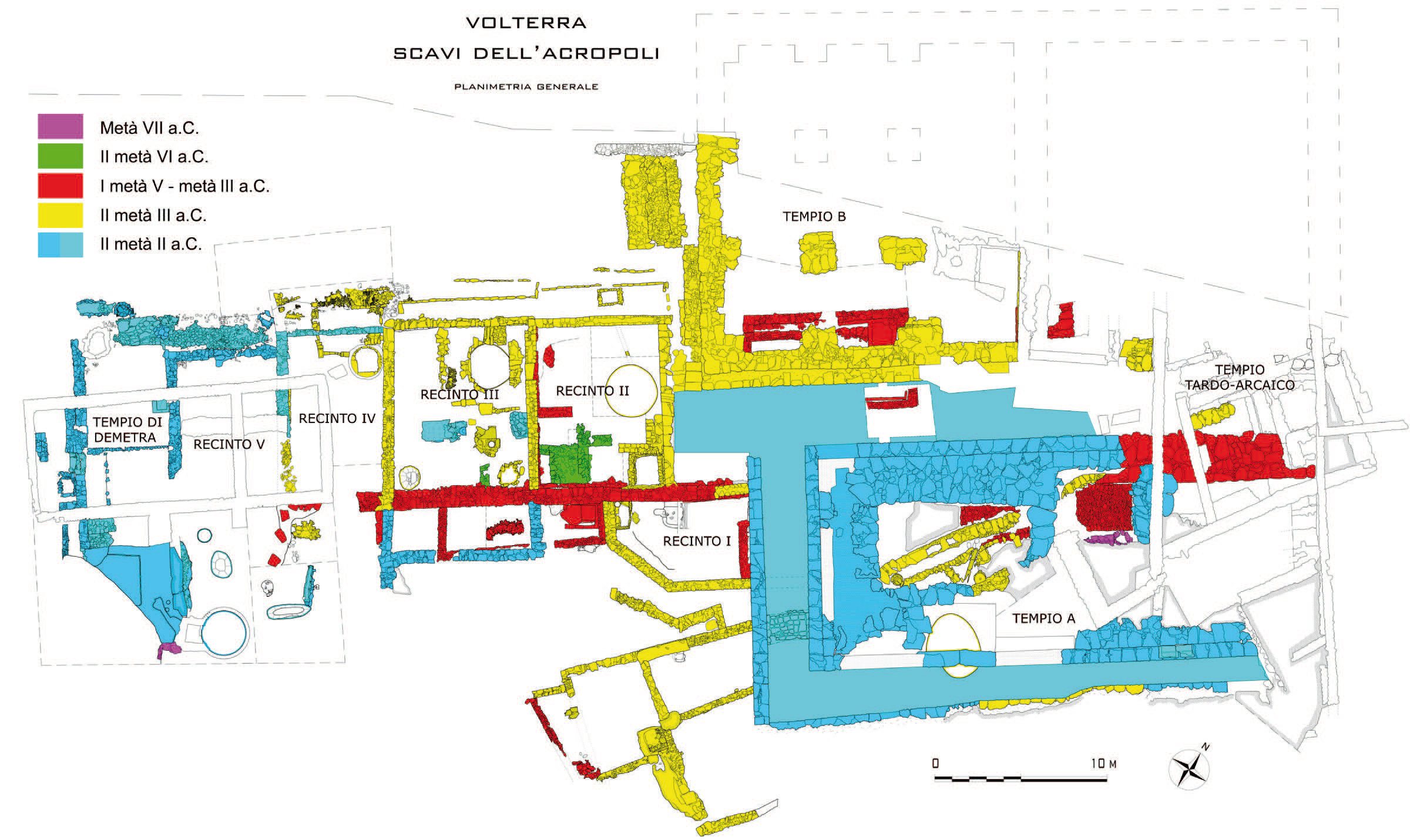
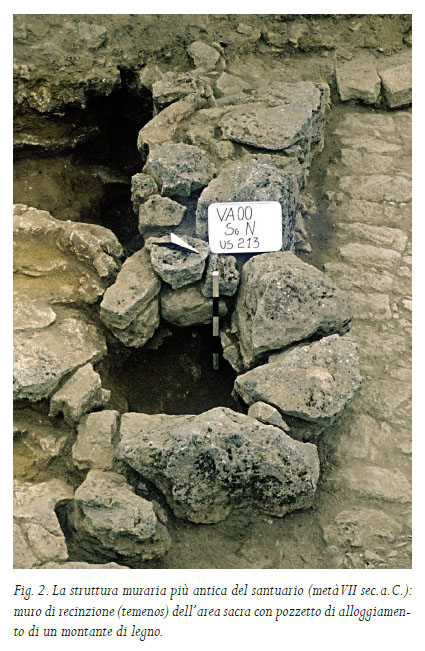
2. Foundation of the Sanctuary (7th century BC): Excavations beneath Temple A revealed a section of the first temenos (stone enclosure wall), dated to the second quarter of the 7th century BC (675–650 BC), representing a unique example of such an early monumental sacred structure in northern Etruria (FIG. 6, 8, 11).
-
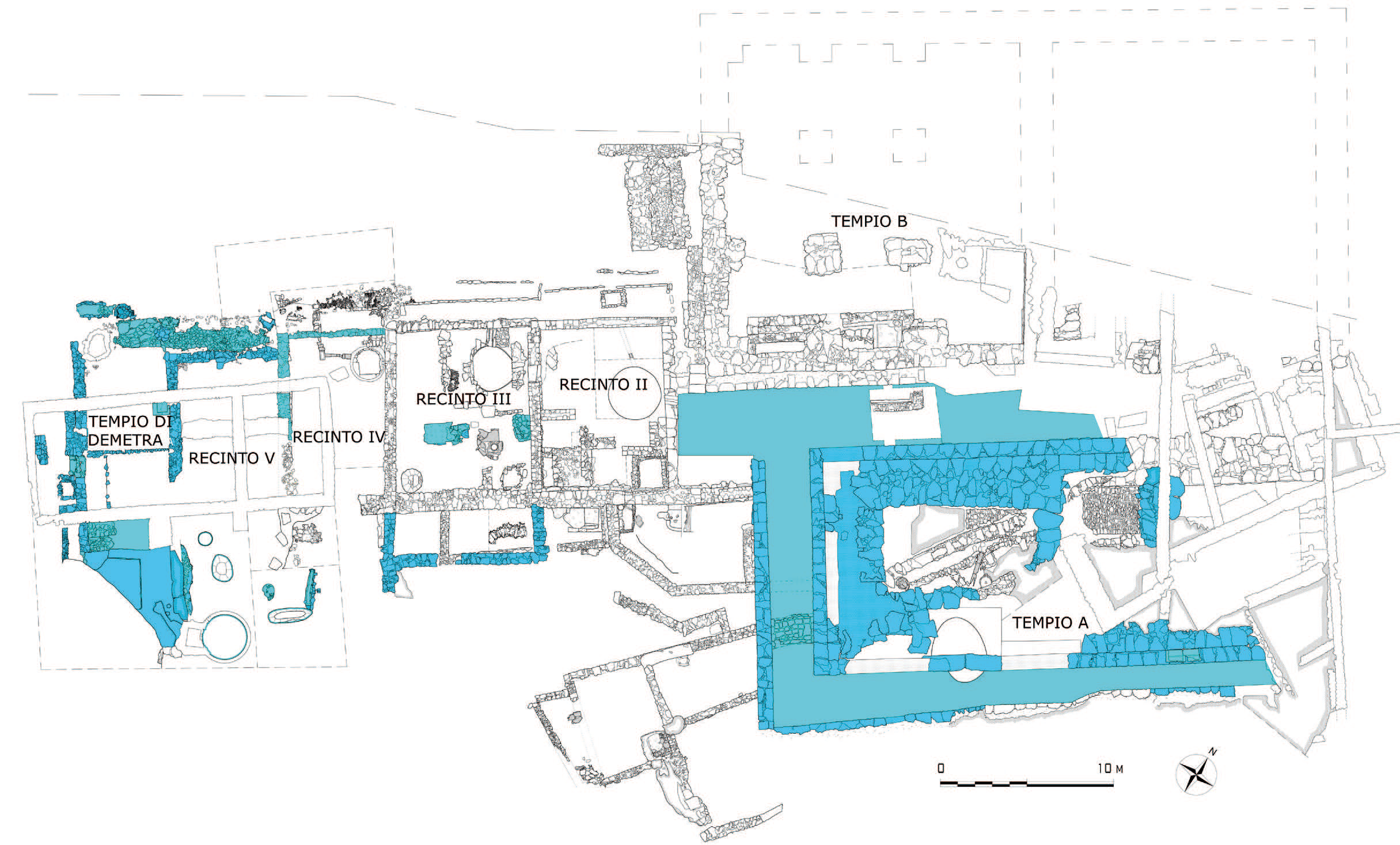
- Fig. 6 – Scavi dell’Acropoli, planimetria generale
-
- Fig. 8 – Scavi dell’Acropoli, planimetria generale

-
- Fig. 11 – La struttura muraria più antica del Santuario
3. Archaic Monumentalization (6th–5th centuries BC): Archaeological investigations have identified the remains of a small shrine (sacellum) decorated with Campanian-style terracotta elements and a large Tuscan-type temple (around 480 BC), whose decorative features attest to the employment of specialized craftsmen from Caere.
4. Hellenistic Period: The most impressive monumental layout was established with the construction of Temple B (late 3rd century BC) and Temple A (mid-2nd century BC) (FIG. 9, 10).
-
- Fig. 9 – Recinti e Tempio B

-
- Fig. 10 – Templi A e B
5. Post-Classical Period: After the abandonment of the area in the 3rd century AD, a medieval urban district developed on the site during the 13th century, which was later razed to the ground in 1472 by the Florentine troops.
6. 2014 Excavation Campaign: The excavation of a sector east of Enclosure I helped fill a gap in our knowledge of the Early Hellenistic period (3rd century BC), documenting the presence of metallurgical production activities (a small bronze furnace, slag remains, and crucibles) within the sacred area.
Investigations in the western district revealed a complex system of five open-air enclosures (FIG. 6). Systematic excavations made it possible to identify:
Bothroi (votive pits): Underground installations designed to channel libations (water, milk, and juices) directly into the earth, considered the dwelling place of the deity (FIG. 12, 13).
Ritual Deposits: Archaeologists uncovered accumulations of hundreds of terracotta torches (FIG. 14) and inscribed vessels with dedications to deities such as Démetra (Etruscan ati, “mother”) and a primordial divine pair, Papa and Chia (FIG. 15).
-
- Fig. 12 – Bothroi (fosse votive)

-
- Fig. 13 – Bothroi (fosse votive)

-
- Fig. 15 – Iscrizioni

-
- Fig. 14 – Fiaccole in terracotta


